Stem Cell Therapy for Autism: What Parents Need to Know About the Supreme Court Ruling
When parents receive an autism diagnosis for their child, they often explore every possible way to help their child communicate, learn, develop life skills and live a more independent life. In this journey, treatments advertised as offering major improvements or even a cure can create hope, but they can also expose families to financial loss and medical risks.
One such intervention is stem cell therapy.
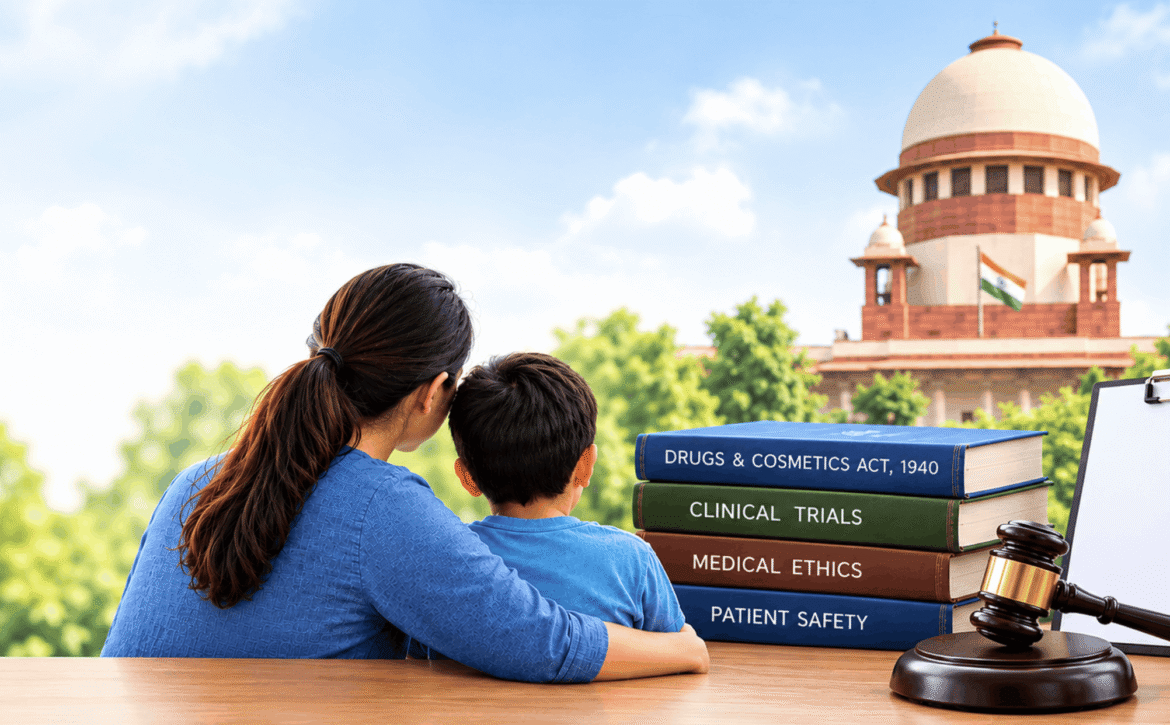
On 30 January 2026, the Supreme Court of India delivered an important judgment in Yash Charitable Trust & Ors. v. Union of India & Ors., Writ Petition (Civil) No. 369 of 2022, reported as 2026 INSC 96. The Court clarified that stem cell therapy for Autism Spectrum Disorder (ASD) cannot be offered as a routine medical service and may be administered only within an approved and monitored research or clinical-trial setting.
The Court subsequently issued further directions on 13 October 2026 concerning people who were already receiving this therapy.
This article explains the key decisions, their implications for families and the precautions parents should take before considering such interventions.
Disclaimer: This article is for public awareness and general information. It is not a substitute for medical or legal advice. Please refer to the official court orders and applicable government guidelines for the latest requirements.
1. Why did this case reach the Supreme Court?
The case began as a Public Interest Litigation (PIL) in 2022. It was filed by four petitioners:
- Yash Charitable Trust – an organisation working with people with autism and other intellectual and developmental disabilities.
- Dr. Vibha Krishnamurthy – a developmental paediatrician.
- Forum for Medical Ethics Society – an organisation concerned with medical ethics.
- Mr. K.S. Ganpathy – a parent whose child had received stem cell therapy for autism.
The petition raised concerns about clinics advertising and providing stem cell therapy as a treatment or cure for autism, even though scientific evidence had not established it as a safe and effective standard treatment.
Families were spending substantial amounts of money in the hope of improving their children’s lives. However, unlike participants in properly approved clinical trials, people receiving commercially offered procedures might not have the same regulatory safeguards and protections.
The petitioners asked the Court to ensure that existing medical, ethical and regulatory rules were properly enforced. The case was not about blaming parents for seeking help; it was about protecting families from unproven medical claims and ensuring that research involving vulnerable patients follows appropriate safeguards.
2. What is stem cell therapy, and why are parents concerned?
Stem cells are cells that can develop into different types of cells under certain conditions. Researchers are studying their potential uses in various medical conditions.
Some clinics have offered stem cell procedures to children with autism, sometimes using cells obtained from the child’s own body. These procedures have been promoted with claims of improvements in communication, behaviour, attention and other developmental areas.
For parents, such claims can be appealing, particularly when conventional support services are expensive, difficult to access or provide gradual progress.
However, a treatment being offered by a clinic does not mean that it has been scientifically established as safe and effective for autism. Reports of improvement from individual families are not, by themselves, sufficient proof that the intervention caused those improvements or that it will benefit other children.
Autism is a complex neurodevelopmental condition, and support needs vary from person to person. Parents deserve reliable information about the evidence, potential risks, costs and available alternatives before making decisions about their child’s care.
3. What did the Supreme Court decide?
The Supreme Court examined the scientific evidence, medical guidelines, regulatory framework and arguments presented by the parties.
Its key findings were as follows.
A. Stem cell therapy cannot be offered as routine treatment for autism
The Court held that stem cell therapy for autism cannot be offered as a regular, paid clinical service. It may be administered only within an approved and monitored research or clinical-trial setting.
The Court relied on the position of relevant medical and research authorities, including the Indian Council of Medical Research (ICMR) and the National Medical Commission (NMC), that the available scientific evidence does not support its use as routine treatment for autism.
B. Parental consent does not make an unproven treatment acceptable
Parents have the right to participate in decisions about their child’s healthcare. However, the Court explained that choosing a procedure does not automatically make it an acceptable medical treatment.
For consent to be meaningful, families need adequate information about the procedure, its purpose, possible benefits, risks, complications and alternatives.
When reliable evidence about the effectiveness and risks of an intervention is lacking, parents may not have enough information to make a fully informed decision about it.
The Court also highlighted the risk of therapeutic misconception, believing that an experimental procedure is an established treatment rather than an intervention being studied through research.
C. Stem cell research is not banned
The judgment does not prohibit scientific research into stem cells or prevent eligible individuals from participating in properly approved clinical trials.
Instead, it requires such research to take place within the applicable regulatory and ethical framework, with appropriate approvals and monitoring.
D. Clinics cannot bypass regulations by calling the procedure something else
The Court considered arguments that certain procedures using a patient’s own cells should be treated as medical procedures rather than drugs.
It clarified that stem cells fall within the broader definition of drugs under the Drugs and Cosmetics Act, 1940. The relevant regulatory requirements must therefore be followed.
The Court also held that using stem cells for autism outside an approved research or clinical-trial setting is unethical and may amount to medical malpractice.
Source: Supreme Court of India, judgment dated 30 January 2026, 2026 INSC 96.
4. What action can be taken against violations?
The judgment explains that doctors who administer, prescribe or promote stem cell therapy for autism as a routine clinical service outside an approved trial may face professional misconduct proceedings.
Clinics may also face regulatory action, including possible cancellation of registration and other penalties under applicable law.
These consequences reinforce an important message: families should not have to rely only on a clinic’s promises or reputation when deciding whether an intervention is legitimate.
Medical providers are responsible for following the applicable standards of care and regulatory requirements.
5. What about children who were already receiving stem cell therapy?
This is an important concern for parents whose children had started treatment before the judgment.
In its January 2026 judgment, the Court recognised that existing patients should not simply be left without appropriate medical supervision. It directed the Union Health Ministry, together with AIIMS and the NMC, to work out an appropriate arrangement for these patients.
In a subsequent order dated 13 October 2026, the Supreme Court issued further directions concerning existing patients, including the creation of an online registration portal and a protocol explaining the applicable rules. The Court also addressed the temporary continuation of therapy for registered existing patients while a regulated pathway is worked out.
These directions concern a specific transitional arrangement for existing patients. They do not amount to general approval of stem cell therapy as a treatment for autism.
Families already involved in such procedures should consult their treating medical team and follow the latest directions issued by the Court and the relevant authorities. They should not assume that the arrangements for existing patients automatically apply to new patients.
For the current position, please consult the official court orders and government advisories linked at the end of this article.
6. What does this mean for parents considering stem cell therapy?
The judgment provides important guidance for families who may be approached by clinics offering stem cell procedures for autism.
Before making any decision, parents should keep the following points in mind:
Do not confuse an advertised treatment with an approved treatment. Claims made by clinics, testimonials and individual reports of improvement do not establish scientific effectiveness.
Ask whether the procedure is part of an approved clinical trial. Request the trial’s official registration details, regulatory permissions and ethics committee approval. Verify these details independently with the relevant authorities.
Understand the difference between research and treatment. A clinical trial is designed to investigate questions about safety and effectiveness. Participation does not guarantee improvement.
Ask about costs and safeguards. Obtain clear written information about expenses, possible complications, follow-up care and the protections available to participants. Do not assume that a commercial package offers the safeguards of an approved clinical trial.
Be cautious of promises of a cure. No clinic should pressure parents into making a major medical or financial decision by promising guaranteed results.
If a clinic offers stem cell therapy for autism outside an approved clinical trial, parents should seek clarification from the relevant regulatory authority rather than relying solely on the clinic’s explanation.
7. What should families focus on instead?
Every autistic child has individual strengths, needs and developmental goals. Support should be based on those needs, with appropriate professional guidance.
Depending on the child, useful areas of support may include:
- Communication and language: speech and language therapy, including support for functional communication.
- Daily living skills: occupational therapy and structured opportunities to practise self-care and independence.
- Education and learning: suitable educational approaches, reasonable accommodations and individualised learning goals.
- Behaviour and emotional well-being: understanding the reasons behind distress or behaviours and providing appropriate support.
- Physical health and nutrition: addressing relevant health concerns with qualified healthcare professionals.
- Family and caregiver support: practical guidance, counselling where needed, peer support and help navigating available services.
Progress may be gradual, and no single intervention works in the same way for every child. Families should be supported in making informed decisions without being made to feel that they have failed their child if a particular approach does not produce the hoped-for results.
The objective is not to chase every advertised intervention. It is to identify meaningful, evidence-informed support that helps the child communicate, participate, develop skills and enjoy a better quality of life.
8. What does this judgment mean for the wider autism community?
The case raises issues that go beyond stem cell therapy.
Many families seek experimental interventions because they face significant gaps in access to diagnosis, therapy, education, reliable information and long-term support. When parents struggle to find affordable and appropriate services, promises of a breakthrough can become especially attractive.
Protecting families therefore requires more than regulating unproven procedures. It also requires better access to evidence-informed care, transparent communication from healthcare professionals, stronger public awareness and effective action against misleading medical claims.
Parents need trustworthy guidance, not false hope or blame. They should be able to ask questions, understand the available evidence and make decisions without being pressured by claims of miraculous results.
At Lets Help India and the Autism Parents Forum, we believe that informed families, responsible healthcare practices and accessible support systems are essential to improving the lives of autistic individuals.
Every parent deserves clear information. Every child deserves safe, respectful and appropriate care.
Official sources and further reading
- Supreme Court judgment: Yash Charitable Trust & Ors. v. Union of India & Ors., W.P. (C) No. 369 of 2022, judgment dated 30 January 2026, 2026 INSC 96. Read the judgment on the Supreme Court of India website.
- Subsequent Supreme Court proceedings: Refer to the Court’s order dated 13 October 2026 for directions concerning existing patients and the regulatory arrangements. Read recent reporting on the order.
- Government advisory: Ministry of Health and Family Welfare, advisory on the regulation of stem cell therapy, dated 16 September 2026. Read the government announcement.
This article is intended to support awareness and informed decision-making among parents and caregivers. For individual medical decisions, consult a qualified healthcare professional. For questions about legal or regulatory compliance, seek guidance from the relevant authority or a qualified legal professional.
